The Making of a Far-Right Governing Party in Germany, Again.
Silas Sherman ‘29
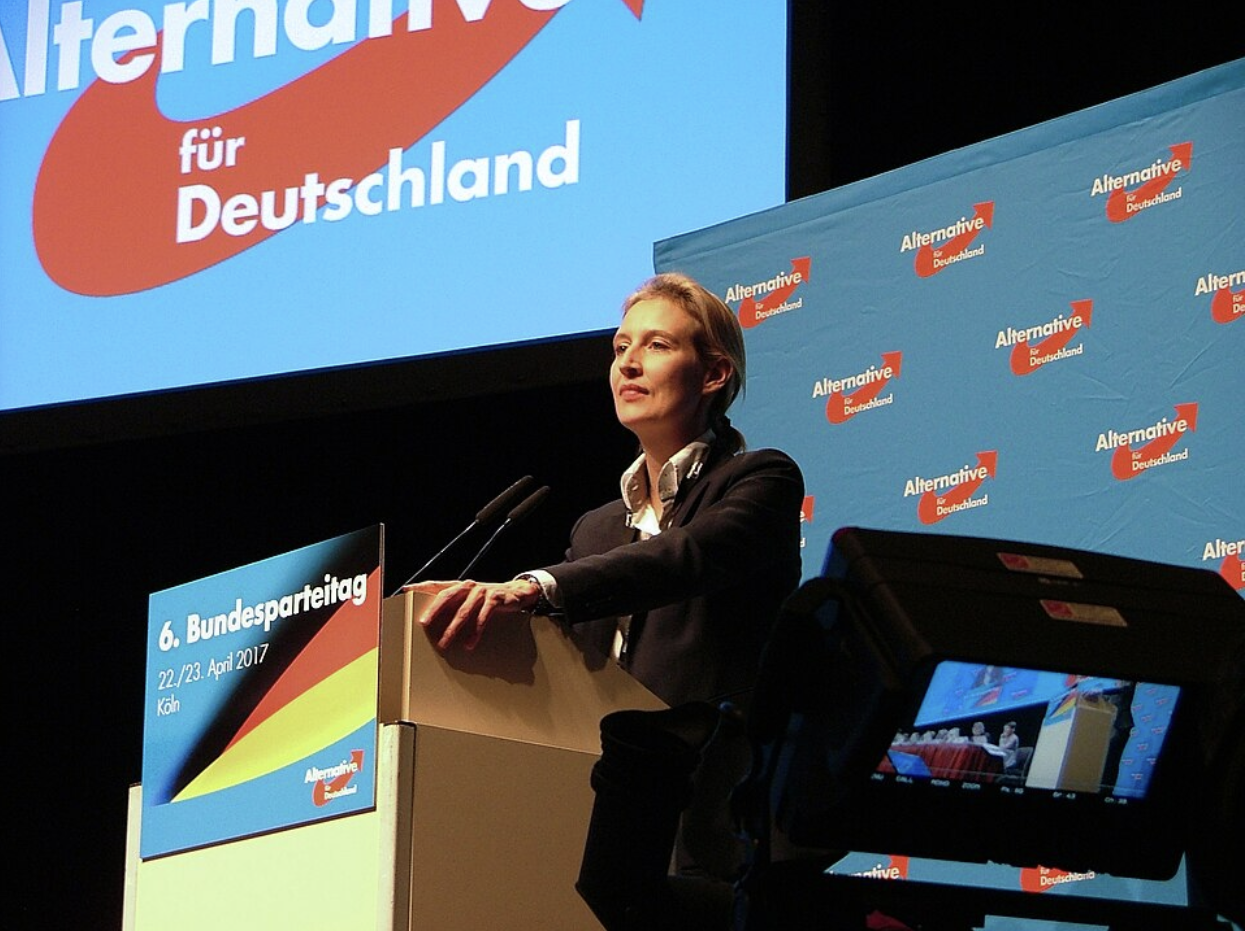
Photo Credit: Olaf Kosinsky/www.kosinsky.eu CC BY-SA 3.0
The night of Sept. 6, in the eastern state of Saxony-Anhalt, something happened that eight decades of postwar German political consensus were built to prevent. The far-right Alternative for Germany (AfD) won 43.8% of the vote, more than doubling its 2021 result and finishing far above the previously hegemonic Christian Democratic Union (CDU), which won only 17.2% after 24 years in power. Two weeks later, the AfD topped the poll in Mecklenburg-Vorpommern with 38.2% of the vote, an eighteen-point swing, while nearly tripling its share of the vote in the historically progressive Berlin. For the first time since 1945, a movement the German domestic intelligence service classifies as “confirmed right-wing extremist” is positioned to no longer just sit in a state parliament, but to lead the government.
The AfD was founded in 2013 as a dry, single-issue, economy-focused party opposed to the euro bailouts. It has since been captured, in almost every aspect, by its most conservative nationalist wing, led by figures like Thuringia’s Björn Höcke, who has been fined for using Nazi-era slogans. Co-chairs Alice Weidel and Tino Chrupalla now front a party whose platform calls for the closing of Germany’s borders, massive deportation campaigns against asylum seekers and a restoration of a “traditional” national German identity to combat what it sees as decades of enforced multiculturalism. AfD sits, both ideologically and diplomatically, in stride with Marine Le Pen’s National Rally, Viktor Orbán’s Fidesz, and the Republican Party’s MAGA movement.
Ulrich Siegmund, the AfD’s young lead candidate in Saxony-Anhalt, called the result exactly what the party had spent a decade working toward: “We have achieved exactly what we wanted to achieve.” Weidel, addressing the party faithful in Magdeburg, was more blunt about what she believes the vote authorises: “We have received a very clear mandate to govern here.”
The AfD’s major gains are predominantly confined to the territory in eastern Germany that was formerly part of the GDR, but experts say it should not be explained away as a protest related to old Cold War-era divisions. The AfD’s gains are in areas where there is a growing set of material grievances among the German public: deindustrialisation in the east, a deeply unpopular coalition government under Chancellor Friedrich Merz mired in record-low approval, stagnant wages, and a housing and cost-of-living crisis that the CDU-SPD (Christian Democratic Union- Social Democratic Party) “grand coalition” has done little to address. Turnout in Saxony-Anhalt alone hit a record 77.8%, with new and previously unengaged voters showing out in droves for something they perceive as a change from the mainstream.
AfD has also simply out-organised its rivals in the new mediascape in a post-COVID world: TikTok, Telegram, and town-hall meetings dominate the AfD media strategy. Furthermore, the far-right party has benefited from the slow collapse of the so-called Brandmauer, the “firewall” in which Germany’s mainstream political parties agreed never to form a government with the far right. That same firewall that was once seen as a moral commitment from the mainstream parties has backfired and is working as free advertising for the AfD, who point to it as a badge of anti-establishment authenticity.
The scale of the result stunned even German Chancellor Merz, who in the aftermath of the AfD victory admitted that “Yesterday’s result has changed not only Saxony-Anhalt, but Germany as a whole. We are all profoundly shocked. We did not expect it to turn out like this.” An admission that has, however, sat awkwardly alongside his refusal to reconsider the deeper causes, as his government has recently engaged in massive austerity measures and migration crackdowns in a failed bid to outflank the AfD from the right — which critics on the left have argued only legitimised the premises made by the AfD.
The left’s response has been more pointed, although fractured. Heidi Reichinnek, the Left Party’s Bundestag co-leader, has insisted that her party will not follow the populist left-conservative Sahra Wagenknecht Alliance in flirting with the idea of governing alongside the far right, declaring that “there should never be cooperation with a far-right party.” Her party has instead tried to build a competing insurgency of its own in the east. Running on rent control and welfare defence, the Left Party uses the slogan, “Heimat ist für alle da,” literally, homeland is for everyone. It is a bet that economic security — in lieu of nationalism — can still be the more persuasive answer to eastern Germany’s anxieties. So far, the numbers suggest that the Left is recovering some lost ground, but nowhere near enough to blunt the AfD’s momentum.
The immediate consequence of the Saxony-Anhalt elections is a governing puzzle. The AfD is three seats short of an absolute majority, and every other party in the chamber still refuses to build a coalition with it. This leaves open the possibility of an AfD minority government tolerated, faute de mieux, by rivals with no other way to keep the state functioning. Weidel has already used the moment to demand snap federal elections, arguing that only the voters of Germany can resolve what she refers to as a coalition in crisis.
The shockwaves sent out by this echo across all of Europe. Every European far-right party that has spent the 21st Century insisting it could win real power through the ballot box now has an example to point to. For Le Pen in France, for Reform UK, for the Freedom Party in Austria, Saxony-Anhalt now serves as proof of concept of the normalisation of the new European right.
This electoral result scares us! What path is Germany following? The path it has already taken?
-Eva Umlauf, Holocaust Survivor and President of the International Auschwitz Committee