The Mass Movement Behind Zohran Mamdani’s Historic Win, and the Sarah Lawrence Students Who Took Part In It
Katie Oravecz ‘29
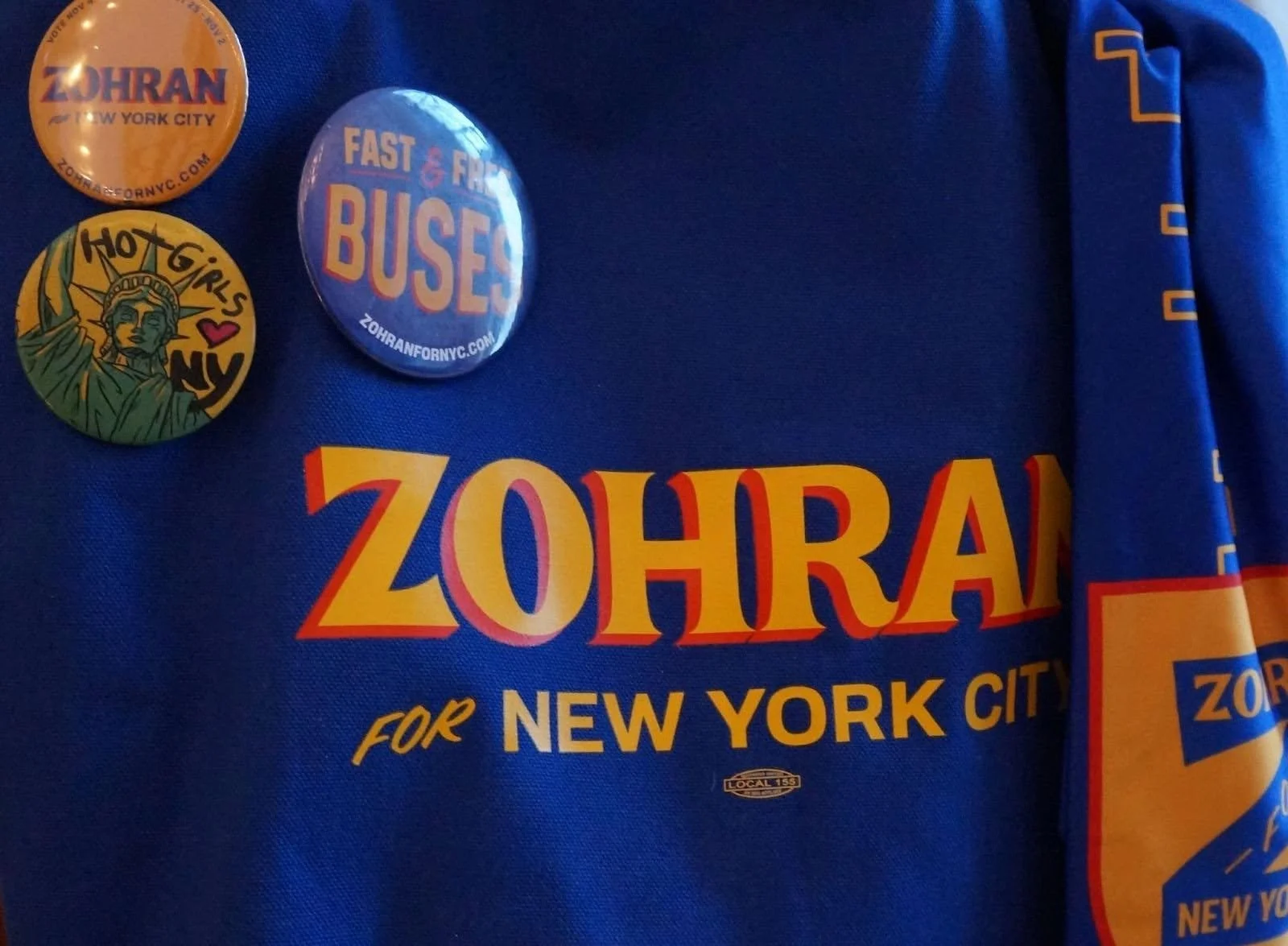
Photo by Katie Oravecz ‘29
In the months leading up to Nov. 4, residents of New York City have experienced a new phenomenon upon their doorstep. It came in the form of volunteers knocking on their doors, flyers and folders in hand, asking whether they were planning to vote in the upcoming mayoral election. Canvassing, a campaign tactic that involves a group of volunteers going door to door trying to identify potential supporters, is a key part of political campaigns and served as the backbone to Zohran Mamdani’s eventual path to victory. The 34-year-old Assemblyman, who now serves as the 112th Mayor of New York City, first launched his campaign in the fall of 2024. His campaign promised free buses, a rent freeze for rent-stabilized tenants, and universal childcare, all of which have remained at the core of his campaign and subsequent administration ever since.
Mamdani, who just about a year ago was polling with less than one percent of the vote, garnered massive support overnight. In June, he delivered a surprising upset to disgraced former Governor Andrew M. Cuomo in the Democratic primaries and swept the November elections, with over a million votes, winning a three-way race between Cuomo (now running as an Independent) and Curtis Sliwa, the Republican nominee.
Mamdani, in his speech on Nov. 4, dedicated his victory in part to his extensive volunteer base, who he called an “unstoppable force” that “eroded the cynicism that has come to define our politics.” In its final stages, the campaign reached over 100,000 volunteers, the largest in New York history, and was holding canvasses every day in neighborhoods across the five boroughs.
One of the key demographics that came out in support of Mamdani were young voters, specifically aged 18 to 29, lured in by his charismatic presence, relatable message and extensive social media campaign. Mara Perez ‘29, who canvassed for Mamdani in the East Village, was one of the many young people who found out about the campaign through social media sites such as TikTok. Upon arriving at Sarah Lawrence, she chose to become involved personally, going out to volunteer for the campaign. “I think it’s important to stand up for what you believe in,” she said. “Even if his policies won’t directly affect me, they will directly affect the 8 million people who live in New York City.“
The field operation swept over the city. Canvassers knocked on millions of doors and recruited other volunteers who then joined the effort. Lucy Lackman, Class of ‘29, got involved with volunteering for Mamdani during the primary election in May, when she got canvassed herself. “I got canvassed. And yeah, I was like…you don’t have to worry about me. I’m already bought in. And so at that point, I did actually sign up to canvass.” Lackman’s first time voting for Mamdani was in the general election. Perez reiterated, “I don’t know how other people can’t see how much of an impact they can have individually. They have so much power, and not just with their vote.”
For many of those students unable to cast their vote in this election, volunteering was a way to get involved in local politics. While technically outside of the city limits, Sarah Lawrence’s proximity means that many students have connections to the city and feel affected by its politics. Upon being asked whether the results of this election would impact students at Sarah Lawrence, Amanda Buendia ‘29, who similarly volunteered for Mamdani, replied: “I feel like they do, because it’s so local. It might not be super direct, but I feel like there is still an impact.”
Perez cited more direct impacts of Mamdani’s proposed affordability agenda: “Definitely free buses. As a college student, oh my god, the free buses are going to be a game changer in the city… Because getting to the city is so expensive.”
People also found community in these volunteer events, something clearly emphasized by the campaign. Canvasses began with brief introductions about why people were there and how Mamdani’s victory would impact them. Reasons ranged from simple, such as wanting childcare or a rent freeze, to more abstract ones, like taking part in a new era of politics. Canvass leads were guiding newcomers and welcoming returning regulars. Canvasses would end in “socials,” where volunteers would meet up at a local bar or cafe and discuss what transpired during the shift while chatting with fellow volunteers.
Knocking on doors is fundamentally a social activity. It can also be a grueling process. Most people will not be at home, or are unwilling to open their doors to talk. Getting into buildings can be hard, and doormen are often not the most receptive. However, those few conversations can bring a lot of fulfillment. Lackman spoke about what she enjoyed most about her canvasses: “Engaging with my local community, and just getting to talk to my neighbors…I really started to enjoy it and started to have some interesting conversations with people.”
Beyond its local impact, many feel that Mamdani’s victory represents something greater. “I think less so tangibly…with the rise of far right politics and all the crazy things that are going on right now, communally it would just be a really big win to know that there are people who can have grassroots campaigns…and actually care about the people they are serving,” Buenida said. Mamdani’s campaign ran on a platform that catered to those who felt cheated by the system they lived in. Many of the residents never had campaigns knock on their door before.
“Definitely inspiring,” Perez stated. “It gives hope for a better future.”
Arguably, Mamdani’s victory seems to be indicative of a new wave of left-wing politics. Progressive candidates triumphed in other places during this election cycle, such as New Jersey and Seattle, while Republicans have lost ground in previous strongholds. Membership in the Democratic Socialists of America (DSA), the left-leaning political organization behind Mamdani’s historic run, has seen a recent surge. It signals a growing force in politics that perhaps reflects people’s disillusionment with the Democratic base.
With Congressional midterms coming up in 2026, New York City will be an even bigger battleground of political campaigns. Whether this momentum keeps up remains to be seen. What is sure is that Mamdani’s win paved the way for many who felt disillusioned by politics to fight for a future that they believe in and reclaim their place in the electoral equation. Lackman said, “I think that the strength of the campaign is that they can draw in people from all different backgrounds, and just assemble this massive diverse coalition of people, and especially young people who felt like maybe there wasn’t a place for them in politics, and I think that’s really important.”