Is Journalism at Stake?
Kelly Dixon ‘28
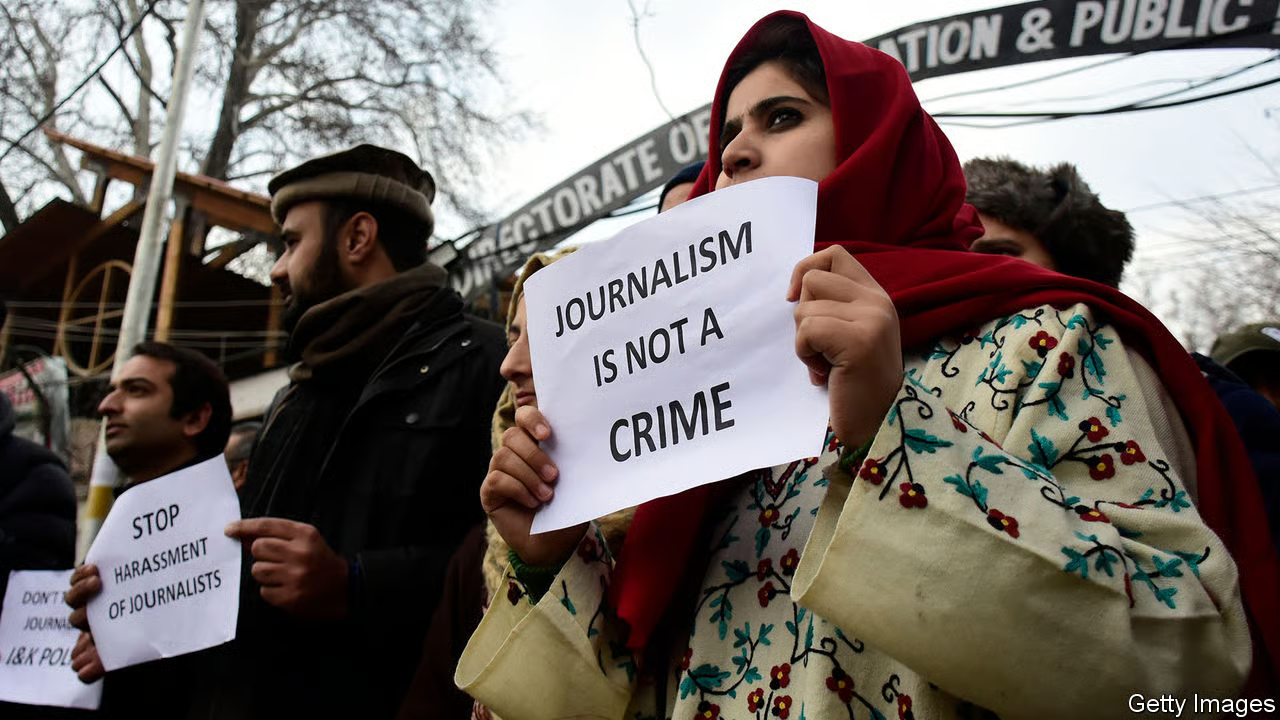
Image via The Economist from Press freedom: What’s at Stake?
Don Lemon, former CNN anchor and journalist, was arrested on Jan. 18, 2026 for reporting on an ICE protest in Minnesota. Lemon was at the Cities Church in St. Paul, and despite insisting he was merely there to write about the event and not to participate, he was arrested under the guise of "interfering with religious freedom.” The interference of the government with journalism is something that is frightening and concerning for writers and readers. It begs the question: is journalism truly at stake now more than ever?
Along with Lemon being the victim of this threat to journalism from ICE, the percentage of readers of news outlets have been steadily declining in the U.S. since the 2010s. A study by the Pew Research Center from Dec. 2025 found that only 36% of adult Americans follow or read the news regularly, which is down from 51% in 2016.
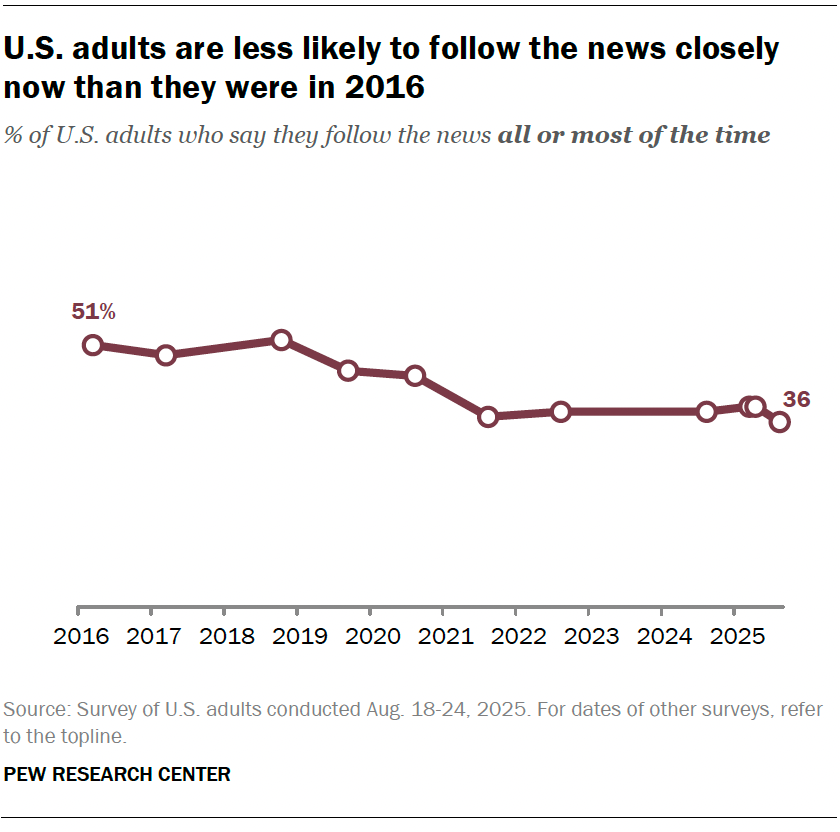
Graph via Pew Research Center from Americans are Following the News Less Closely Than They Used To
Along with the average American reading the news outlets less, it has also become more expensive to read the news. A physical copy of The New York Times now costs a whopping $4.00, with the digital subscription costing $30.00 a month.
The threat to journalism exists not just at large chain newspapers, it exists at Sarah Lawrence. The general knowledge of our paper is few and far between, with students telling me they were unaware we had a school paper until very recently. The payment for our editors also ceased after 2020, with the publishing space and writers room completely inaccessible to members of The Phoenix (quite shocking as Barbra Walters herself is one of our most successful and outstanding alumni). So, what can we do? In the digital age journalism is suffering, with a majority of the population getting their information from social media, as opposed to credible news sources.
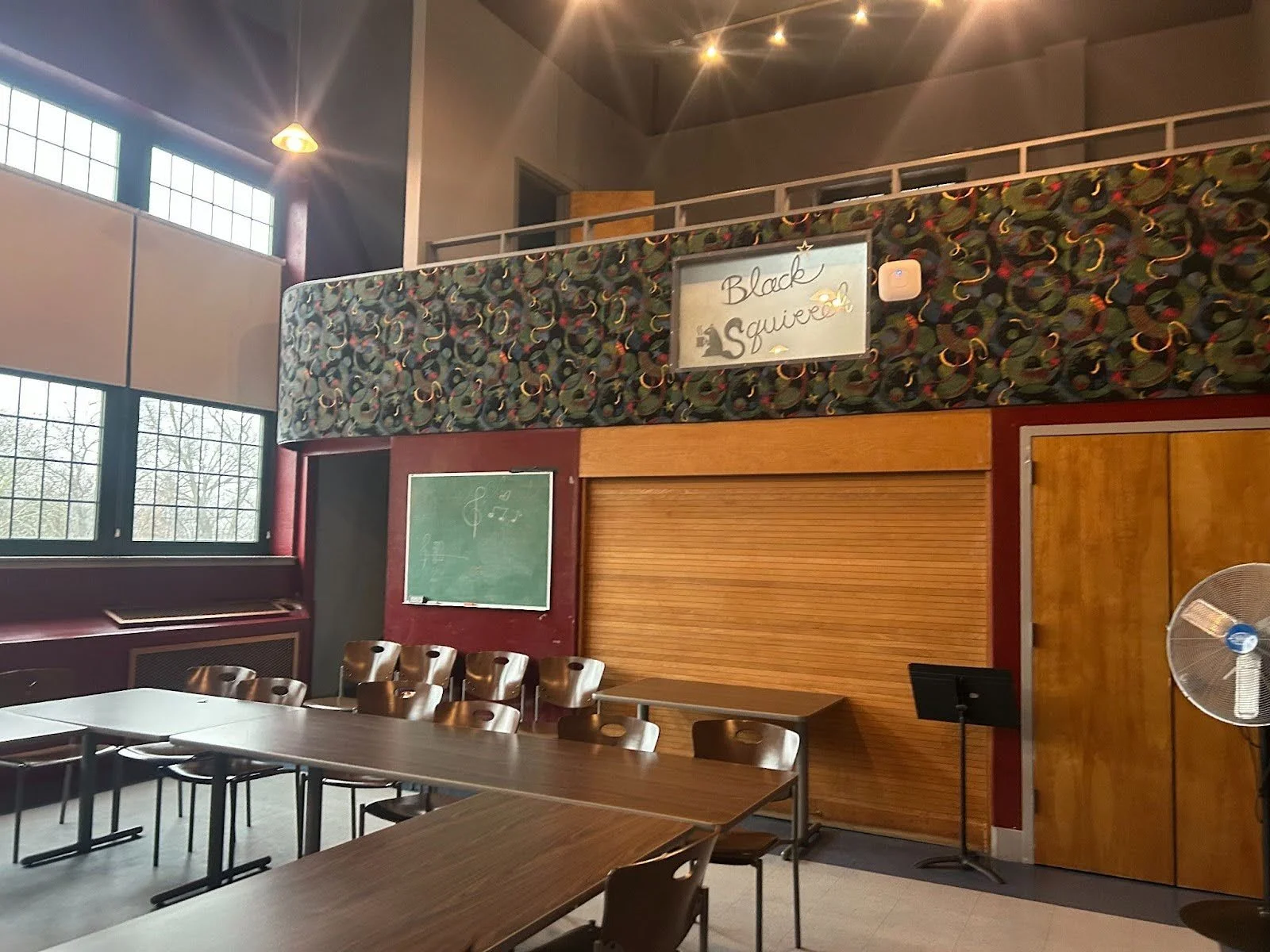

The Black Squirrel, current meeting space of The Phoenix. Images via Kelly Shea Dixon ‘28
Not only does inaccurate information circulate with national news, it also circulates on Sarah Lawrence campus. Rumors circulate on apps such as Fizz—an anonymous social media app for college students—concerning students, student life and staff. Most people fullheartedly believe whatever they read on the app, whether it be about the current Freshman class, SLC President Judd or the school’s financial situation.
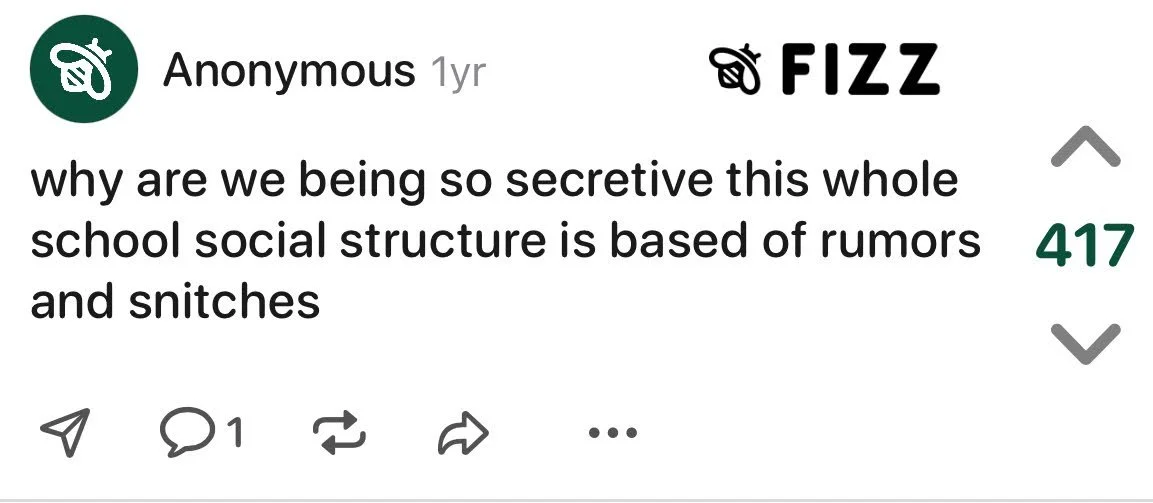
Image via the Fizz app
Media literacy is a big concern with many, especially younger generations, such as millennials, Gen Z and Gen alpha. Media illiteracy can exist on campus as it does on a bigger scale, which can be concerning. However it’s not the fault of the students themselves, rather the lack of knowledge of what is factual and what is facetious.
While media illiteracy and susceptibility to misinformation is taking its toll on a wide array of people, the influence of the right-wing and apps like Truth Social are having an outsized impact. Many Republicans feel targeted by democrats due to identity politics, economic turmoil and wealth inequality. Because of these factors, choosing to believe positive yet false information about our current political climate can make them feel more secure, and less alone in these very confusing times in which we live.
The influence of the current Trump administration on journalism is frightening for those who wish to become journalists in the future, or anyone who wants to be properly informed. News outlets like Fox News thrive in this administration. Along with this, Trump often targets journalists, most notably with Kaitlan Collins; on February 3 2026, Collins was reporting for CNN at the Oval Office and questioned Trump about the Epstein files. The last question she asked President Trump was what he would say to the survivors of Epstein who feel that they haven’t gotten justice. Trump responded to this by telling Collins, “You are so bad, you are the worst reporter. CNN has no ratings because of people like you. You know she’s a young woman, I don’t think I’ve ever seen you smile.” He refused to answer the question, he only went on to say, “You know why you’re not smiling? Because you know you’re not telling the truth, and you’re a very dishonest organization.”
Don Lemon’s case stands out as the star example of journalism being under attack, but he doesn’t seem to have given up hope. Outside the courthouse after his arraignment, Lemon stated, “For more than 30 years, I’ve been a journalist, and the power and protection of the First Amendment has been the underpinning of my work. The First Amendment, the freedom of the press, are the bedrock of our democracy…And like all of you here in Minnesota, the great people of Minnesota, I will not be intimidated, I will not back down.” With journalists continuing to combat the stifling influences of the current administration, there is hope for the future journalists of America, Gen Z and Gen Alpha. The students of Sarah Lawrence will go on to work in newsrooms and produce writing despite attacks on journalism. There is still hope for American journalism, and America’s future.