Why We Hate The Boyfriend Girl (And Why It’s Not Her Fault)
Skylar Quackenbush ‘29
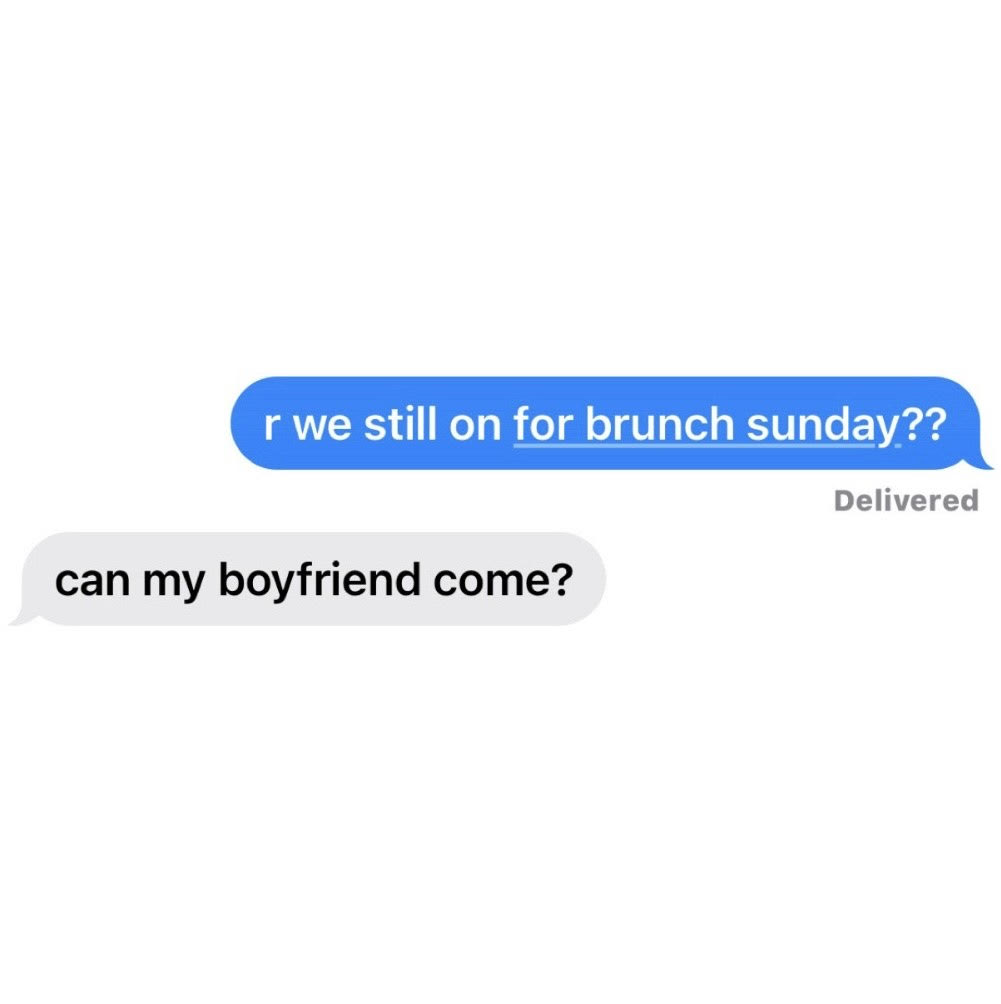
Photo by Antonia King ‘29
Published in Vogue Magazine in late October of last year, an article titled "Is Having A Boyfriend Embarrassing Now?" by Chanté Joseph became the topic of widespread debate across social media platforms, and was responded to by women everywhere. In November, a new social media trend expanded this conversation. Posts on Thanksgiving were dedicated to boyfriends and romantic partners, with no acknowledgement of friends or family. Most recently, on Valentine's Day, social media controversy swarmed the For You Pages of many young women when taken individuals were criticized for calling their partner their “Forever Valentine” in loving Instagram stories.
With Valentine's Day loneliness still lingering, the idea of a romantic partner can sound nice. Romance is great in theory; a partner can act as a companion, an equal and someone to grow with and learn from. However, social attitudes are shifting away from prioritizing romantic love; so much so that we’ve created a term for male-centric women who maintain their taken relationship status. This is who we call “The Boyfriend Girl.”
We all know her. We all feel awful for her when her boyfriend cheats on her again. We all wish we could hear about her life again, rather than the life of the man she happens to be with. Maybe we were her once. She defines herself through her attachment to her partner, a dedication to being his one and only, while neglecting any dedication to herself. She’s the girl who sits in the car while her boyfriend works his “big boy job.” She’s the girl who neglects her relationships, purposefully or not, with other women to focus on the man in her life. But this villainization is no fault of the woman villainized. This male-centric culture ties back to centuries-old, heteronormative expectations placed on women due to the patriarchy.
The complicated part of The Boyfriend Girl’s identity is whether or not she’s truly at fault. She is performing under a plethora of social expectations. Women are often contextualized through their relationship status. There is a sense of accomplishment that comes with a woman dropping the title of being single. A need to celebrate when a woman does not become the oh-so-feared “single-cat-lady.” This status as a girlfriend makes women feel like they are fulfilling a duty placed upon them since birth. Their relationship status of “taken” and identity as a “woman” become intertwined. Young girls are trained from the moment they are born to be a good wife, but can men say they are trained to be good husbands?
The pressure on women to maintain their individuality and independence, combined with the pressure on women to find love, can often feel like two separate spheres with minimal overlap. “Boyfriend Girls” are perceived as automatically less cool, less in touch with themselves and consequently less relatable to other women. “Single Girls” are gaining a status amongst other single women as independent, friendship-focused and what’s in Vogue (literally). There seems to be a newfound solidarity amongst women in remaining single.
For women, a boyfriend is often simply more than a romantic partner. Boyfriends are coming to be defined as a means to evaluate a woman’s sense of self, and her standards for herself. Due to social media, boyfriends are becoming an extension of the way a woman is socially perceived. It makes perfect sense then that, as Chanté Joseph discusses, less women are posting their male partners. There’s not only a sense of shame in failing to meet a new “girl’s girl” standard, but a sense of immense embarrassment if a breakup were to occur.
Romantic love is often marketed as the perfect ending—it is sold on a silver platter to young people everywhere. Instead, what is important is that women have the space to maintain their identity while navigating romantic choices. Young women need to be supported when it comes to maintaining their own identities in relationships. Women and young girls should be allowed to be more than just “The Boyfriend Girl,” and this starts with celebrating womanhood both inside and outside of romantic relationships. It is important to allow these “spheres of womanhood” to coexist, and to be mutually beneficial. Women should be encouraged to be multifaceted, and a part in that is making sure women have support systems of other women.
So, perhaps the next time you go to hate on the so-called “Boyfriend Girl,” take a moment to consider why she might engage in this self-minimizing dialogue, and do not blame her. Blame the socialization that made her feel like she had to exist this way, and offer the support of womanhood that she might just need.