Accessibility of Menstrual Products at SLC
Skylar Quackenbush ‘29
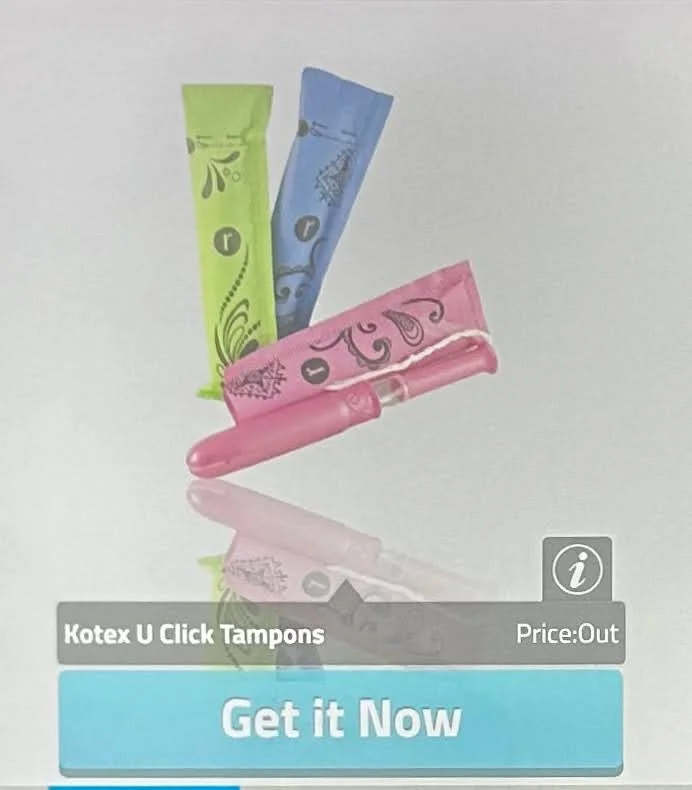
The vending machine in the Barbara Walters Campus Center, which shows tampons are sold out. Photo by Skylar Quackenbush ‘29
A lack of accessibility to period products can prove detrimental to people on college campuses who menstruate, especially when considering cold temperatures and a walk to any nearby convenience stores. A 2021 study from the Boston Medical Women’s Health Center found that 14% of college students have trouble accessing the products they need. The issue also disproportionately impacts students of color, first generation students and immigrant students. This problem affects the student body directly.
One may notice that period products can hypothetically be found in a few places around campus: Barb, Bates and the lower floor of the library. Despite these seemingly viable options, these boxes offering tampons are often empty, proving to be disappointing rather than relieving. This issue does not have a limited scope, it impacts a large proportion of the student body.
These empty boxes proved to be a problem for student Brianna Litman ‘29 when she got her period in between two classes and didn’t have the time to trudge across campus for a pad or tampon and make it to class promptly. She looked for period products in both the Barb and Wrexham bathrooms, but there were no pads or tampons in either spot. This issue also impacted Antonia King ‘29 when she looked in nearly every bathroom in the Barb after being unable to purchase a tampon from the machine, and was still not able to find the products she needed.
An alternative option for access to tampons on campus can be found in the vending machine in the Barbara Walters Campus Center, near the bathrooms. Although, upon investigating, the option to even purchase tampons on campus proved to be impossible, as the supply had completely run out. This has been the case for months.
This lack of menstrual products seems especially jarring considering how widely available contraceptives are around campus. Condoms can be found in multiple residential halls on campus. This is not to say that safe-sex practices are not widely important, especially in college settings, but it does say something about the way we value women’s hygiene, safety, and health. According to the Sarah Lawrence website, the health center can provide birth control and emergency contraceptives, but there is not one mention of menstrual products.
This conversation can be difficult to have. Conversations surrounding menstrual care are wrapped in taboo, and often shame. Both students mentioned above describe the shame in attempting to access menstrual products. Litman describes asking for menstrual products through “whispers,” and details how it can be so difficult to be “open and honest when there’s such a stigma surrounding periods.”
Litman says, “There’s such a large female population at Sarah Lawrence that it should be very important to have accessibility to pads and tampons and menstrual products.”
King doubles down on this idea of shame by describing her experience at twelve years old, getting her period for the first time. Due to stigmas surrounding menstrual care, she states after her first period she bought all of her own menstrual products. King states, “My family has never been a particularly shameful or body non-positive family. But I couldn’t ask my mom to buy me tampons. I was very reliant on the boxes that had tampons and pads in bathrooms” and, “I was reliant because I felt shame asking my family.” Even at a young age, stigma surrounding periods can be a huge limiting factor for comfortability and access.
The importance of supporting the Sarah Lawrence community through adequate menstrual care cannot be understated. Period poverty is a real issue, and the uncomfortability of students is a preventing factor when it comes to receiving the well rounded education that each student on this campus has the right to. Education should not be limited due to anatomy, or a lack of accessibility. King concludes, “There’s a very large percentage of this population that presumably does menstruate and I think particularly because this campus seems to indicate that they care about this issue, they should follow through with that.”